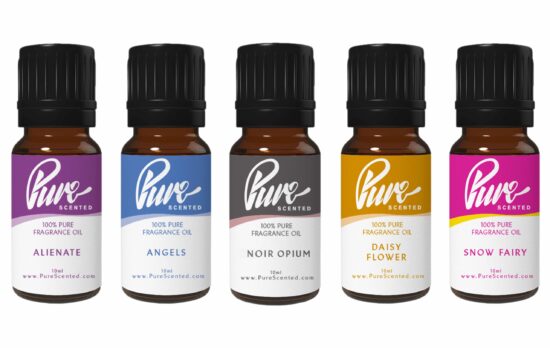
In short: Vanillin and Ethyl Vanillin give fragrance oils their sweet vanilla notes. They do not change how strongly a fragrance throws, but they can darken wax, soap and other bases over time and may crystallise in cold weather. Here’s what that means for your products and how to check any of our oils.
What Are Vanillin and Ethyl Vanillin?
Vanillin is used in fragrance oils when the scent of vanilla is required. It can be a naturally occurring ingredient, as it’s formed on the outside of the vanilla bean, however most Vanillin is synthetically produced.
Ethyl Vanillin is a synthetic chemical that is similar in structure to Vanillin. Ethyl Vanillin is three times stronger than Vanillin, but it is slightly different in scent. You’ll find one or both in many gourmand, bakery, dessert and oriental fragrances.
Does Vanillin & Ethyl Vanillin Content in Fragrance Oils Matter?
🕯 Colour Darkening
Fragrance oils containing Vanillin or Ethyl Vanillin will oxidise faster than those that do not. Oxidation causes the fragrance oil, and the products you make with it, to become darker in colour over time.
This is not a problem if you are using dye in your candles, wax melts or soap, or if you want your products to be naturally darker. If you are aiming for a light-coloured or white product without dye, Vanillin content is worth checking. The darkening could show up immediately or over time — it does not affect scent throw.
❄️ Crystallisation in Cold Weather
Fragrance oils higher in Vanillin content may crystallise when temperatures drop, appearing as small white crystals. These will redissolve as the oil warms up — simply run the bottle under warm water to speed this up. The integrity of the fragrance is not compromised.
💡 Tips for Working with Vanillin-Rich Oils
Test first: make a small test batch and leave it for a week or two before pouring in bulk, so you can see how much the colour changes.
Work with the colour: warm shades such as cream, caramel, brown and gold hide darkening well and suit most vanilla and gourmand scents.
Store oils well: keep bottles tightly closed, away from heat and sunlight, to slow oxidation and avoid crystallisation in cold storage.
How Do I Know How Much Vanillin Is in My Oil?
Check the Details section on any of our fragrance oil product pages. It shows Vanillin and Ethyl vanillin as Yes with the percentage, for example “Vanillin: Yes (7.71%)”, or No if the oil doesn’t contain it.
Every fragrance oil we sell comes with an Allergen Declaration document. You can download these for any of our fragrance oils from our Regulatory Documentation page. Find VANILLIN in the ingredients list:
n.d. (not detectable) — the oil contains no Vanillin and you will not experience any darkening or crystallisation.
A percentage is shown — Vanillin is present at that level. The higher the percentage, the more likely you are to see darkening or crystallisation in your finished product.
Frequently Asked Questions
Does Vanillin affect scent throw?
No. Vanillin can change the colour of your candle or wax melt, but it does not reduce hot or cold throw.
Why has my white candle turned yellow or brown?
The most common cause is Vanillin or Ethyl Vanillin in the fragrance oil oxidising over time. Check the Details section on the product page or the oil’s Allergen Declaration, and for pure white products choose an oil that shows No for both Vanillin and Ethyl vanillin.
My fragrance oil has white crystals in it — is it spoiled?
No. Vanillin can crystallise in the cold. Warm the bottle gently, for example under warm running water, and the crystals will dissolve without affecting the fragrance.
Is Ethyl Vanillin the same as Vanillin?
They are closely related. Ethyl Vanillin is synthetic, around three times stronger and slightly different in scent, and it can cause the same darkening.
If you are unsure which oils are best for your project, get in touch and we will be happy to help.